Product Details
DEEP-1 Underground Magnetic Utility Marker for Sewer & Drain Lines - A Better Alternative to Tracer Wire
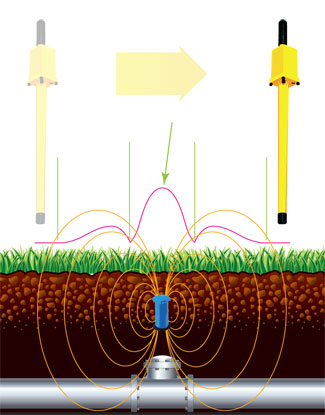
Magnetic location is an extremely efficient utility locating technology, especially when used in conjunction with DEEP-1 magnetic markers. Firms and agencies that implement magnetic location and magnetic marker utility marking schemes are likely to find and mark subsurface utilities more quickly and accurately, and will suffer less damage to underground assets. If installed properly, the DEEP1 can be located up to 3 to 4 feet (0.9 m to 1.5 m)
deep, depending on soil conditions.
 DEEP-1 Magnetic Utility Marker Whitepaper
Faster, Stronger, More Precise:
An Overview of Magnetic Markers and Magnetic Location in Utility Marking
This FREE whitepaper includes:
- A comprehensive study on the use of magnetic markers in underground utility location
- Field lab testing comparing locates at various depths
- Includes case study on location of water & sewer networks in the nation's fifth snowiest city
Click here to view this whitepaper